
UNBOUND15!
July 1 – August 8, 2026
SUSAN LAPIDES • CAROL GOLEMBOSKI • ANNETE FOURNET • KEN WOOD • ANASTASIA SIERRA • ALEYANA MITCHELL • PHILIP SAGER
SUSAN LAPIDES | BOSTON, MA
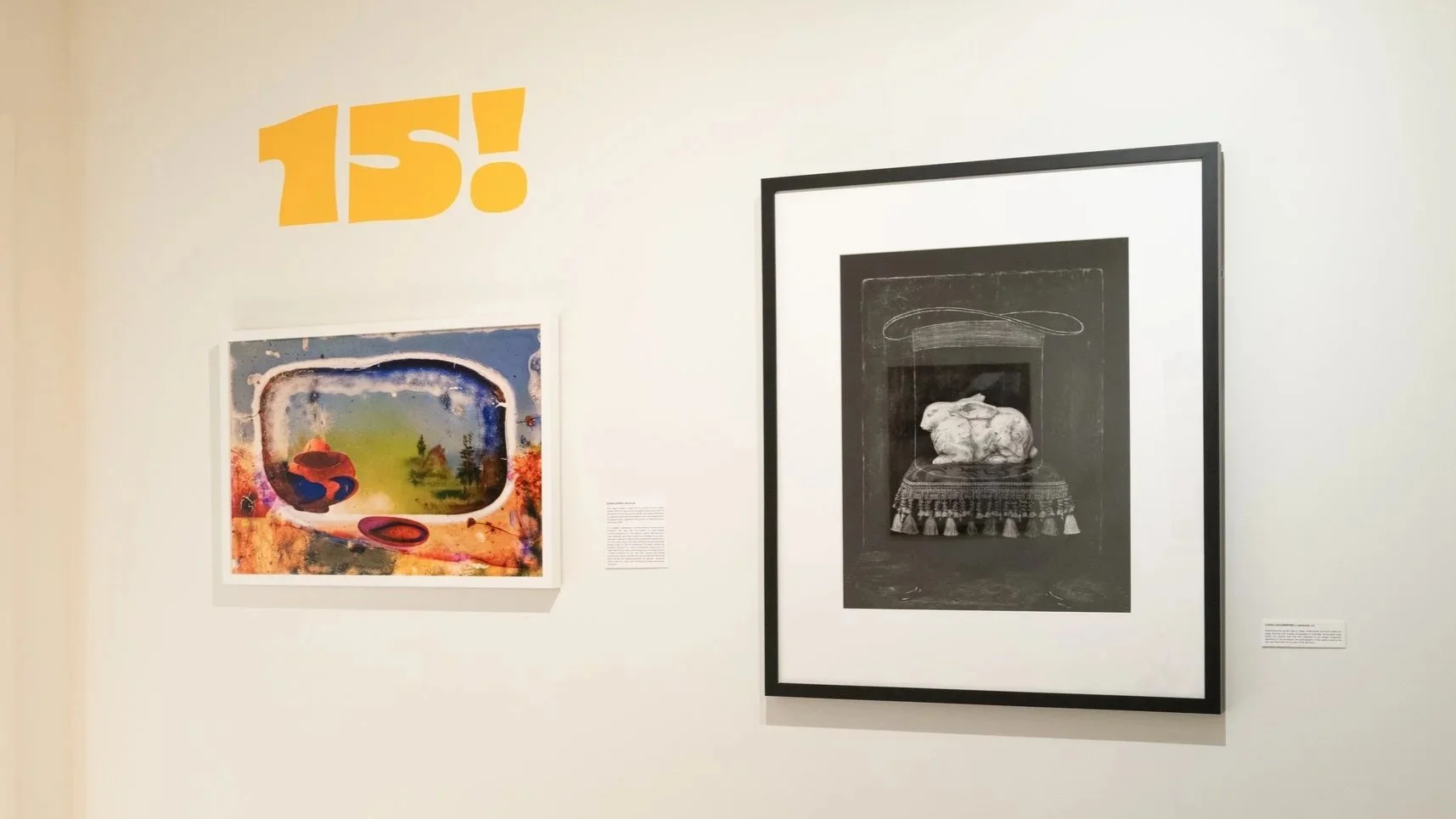
Time Capsule reflects on legacy and the uncertain future of analog archives. While the hope is that photographs will be passed down for generations, they can also become a burden. As I began to think about my legacy and pare down the thousands of slides accumulated over my photographic career, I questioned what survives of a life’s work once its initial function fades.
As a magazine photographer, I routinely examined changing natural conditions— light, wind, tides, and weather— to create carefully controlled photographs. For Time Capsule, however, nature became a close collaborator rather than a subject to be observed. Using slides I was ready to discard, I immersed them in seawater and allowed them to sit for two years, during which they underwent chemical and physical changes caused by salt and temperature. The slides morphed into abstracted color and form, often in unexpectedly magical ways. No longer describing the world I once photographed, the images continue to reflect something true: how time edits, reorders, and remakes everything we believe to be fixed. Even as the slides lose their original clarity, they gain new meaning, becoming time capsules— shaped by chance, altered by nature, and paradoxically renewed through their destruction.
Slide_Number: 039_575, 1986/2026. Archival pigment print of color slide, 16 x 24 inches. Edition #1 of 15 + 2AP. $1,250
Susan Lapides is an American photographic artist who creates time-based projects exploring adolescence, identity, community, and sense of place. Working through portraiture and landscape, she examines the cultural and emotional ties between people and their environments.
Based in Boston, Massachusetts Lapides holds a BA in Art History and Photography from Tufts University and the School of the Museum of Fine Arts. She began her career as an editorial photographer, developing a distinctive approach to color, composition, and visual storytelling while working for national publications - Smithsonian, Life, Time, Forbes, and The New York Times. Her subjects included President Barack Obama, then editor of the Harvard Law Review, Diane Paulus, Rose Kennedy.
Lapides’ exhibits her fine art in North America, with solo exhibits in New Brunswick, Canada at the Beaverbrook Art Gallery (which also published her book St. George: ebb and flow, and Boston’s Griffin Museum of Photography. She was in Critical Mass Top 200 in 2019 and 2024. Her fine art is in publications such as "What Will You Remember," "Frames," "Maclean’s," and "Fraction Magazine”.
Her photographs are held in public and private collections among them at the Beaverbrook Art Gallery, and the Fidelity Corporate Art Collection.
CAROL GOLEMBOSKI | LAKEWOOD, CO
Hat Trick No. 3, 2025. Gelatin silver print, 29 x 24.5 inches, framed. Edition #1 of 7 + 2AP. $1,600
Many years ago I went to the estate sale of a former magician. I drove away with several boxes of magnificent props: collapsible bird cages, oversized playing cards, silk scarves, paper flower bouquets—even a ventriloquist’s dummy. These objects prompted me to consider the common ground between darkroom photography and magic. Both have the ability to amaze and delight; both have the potential to misdirect and deceive.
I began to photograph the props, suspending objects with fishing line and shooting double exposures to simultaneously reference the clichés of magic and the timeworn tricks of traditional photography. During the printing process I employed my own assortment of carefully crafted darkroom techniques: sandwiching negatives, incorporating photograms, and combining photography and drawing. The resulting images are a blend of reality and fiction, with vintage objects serving as surreal metaphors in spaces that only partially exist.
Many of the photographs are superficially whimsical, but with an undercurrent of mischief or even malevolence. Magicians are illusionists who hoodwink their audience through charm, skill and bravado. Likewise, these pictures are designed to seduce the viewer with visual depth and complexity. The arrangements of objects are thinly veiled metaphors for a variety of emotions and anxieties experienced in contemporary society. They address feelings of conflict and helplessness while also suggesting a compulsion—or at least a willingness—to participate in the “show.”
While this project relies on darkness and metaphor, it is also, in part, an ode to the darkroom. For anyone who has ever marveled at an image “magically” appearing in the developer, this series recalls bygone eras in photography. Despite our sophistication regarding image manipulation, our hunger for elaborate special effects, and our widespread cynicism, I use traditional materials to create a sense of wonder and mystery. Through this project I suggest that photography is magic and the darkroom, with its curtains, red glow, and chemical potions, still has the power to leave us spellbound.
Carol Golemboski photographs antiquated objects in carefully staged scenes. Her creative darkroom process combines photography, drawing, and photograms in ambiguous and provocative ways. Golemboski has received grants from Center in Santa Fe, the New York Foundation for the Arts, the Virginia Museum of Fine Arts, Light Work, and the Saltonstall Foundation. Her photographs can be found in the collections of the George Eastman Museum, the Denver Art Museum, and the Museum of Fine Arts Houston. She is a Professor and the Program Director of Photography at the University of Colorado Denver.
ANETTE FOURNET | MEMPHIS, TN / PRAGUE, CR
Mysterious Prague 1, 2025. Archival pigment print, 32 x 24 inches framed. Edition #1 of 10. $1,500
I have photographed Prague, Czech Republic for more than thirty years. Praha (the Czech word for Prague) is a magic place with a long history of legends involving poets, madmen, astrologers, astronomers, ghosts and rogue alchemists. Anyone who visits Praha and spends time there will be altered by the experience. In 1993 I was immediately attracted to the not yet renovated, melancholy, grey beauty of the city. Thirty-two years later and I still haunt her streets like a ghost, but a ghost with a camera.
These distorted images are part of a larger project, Mysteries of Prague. Other than exposure controls, they were not manipulated in Photoshop. Distorted antique glass encasing Baroque paintings in the courtyard of the Loretta Museum (located steps from the Golden Lane, where the alchemists labored for Emperor Rudolf the II) cause reflections of the courtyard and produce the surreal images. Chimera and monsters seem to appear in abundance in the background of each image.
Annette Elizabeth Fournet was born 1953 in Williamsburg, VA. She received a BFA in Photography and a MFA in Graphic Design. She photographs primarily in Central and Eastern Europe.
Annette Elizabeth Fournet has exhibited her photography at galleries and museums in France, Denmark, Spain, Greece, Korea, Italy, Germany, Hungary, Kyrgzstan Republic, Poland, Romania, Czech Republic, Slovakia, the Netherlands, Great Britain and the United States.
Her work is included in public and corporate collections such as the Bibliotheque Nationale, San Diego Museum of Photographic Art, Houston Museum of Fine Art, New Orleans Museum of Art, and others.
Annette Fournet lives in Memphis, Tennessee and in Europe.
KEN WOOD | ST LOUIS, MO
In Situ 04, 2025. Photogravure, 12 x 12 inches. Edition #1 of 8. $250 unframed.
I work in abstraction exploring color, space and gesture through printmaking. I started using instagram to keep a collection of photos I took to use as inspiration for my prints. A few years ago I got a grant to turn these instagram photos into photo-gravures - I thought that a contemporary medium involving fluffy things like selfies and influencers would make a funny contrast with a very early technology in the history of photography; also, as I am a printmaker and not a photographer, the medium of photogravure, which is printed as an etching, allowed me to create photographic work without feeling too much imposter syndrome. With the help of Lothar Osterburg of Bard College, I created a couple dozen photogravures, and then I worked with C.R.Ettinger studio in Philadelphia to whittle these down to a suite of 13 images, which we then printed in editions of 8. The images in this suite contain a range of one to five colors each and explore the superimposition of form over form and the conflation of 2D patterns and 3D spaces in a world that toggles between abstraction and representation.
Ken Wood was born in Richmond, VA in 1967. He received his Bachelor's of Architecture degree from Rice University in 1992, and his MFA with a focus on printmaking from Tyler School of Art in 1998. He works primarily with large scale collagraph-relief prints that explore color and composition through big fat gestural lines, but he also dabbles in photography, mostly for inspiration for compositions for his prints, and mostly through instagram. He teaches full time at St Louis Community College, and has been awarded a solo show at the Print Center, Philadelphia, has been in a group show at the International Print Center New York (now called Print Center New York), and currently exhibits with Haw Contemporary in Kansas City MO and at Houska Gallery in St Louis MO. He has work in the collection of the NYU Langone Medical Center and at the main HQ of Twitter in San Francisco (or he did - we are not sure if that is still the case since the takeover by X), among other places.
ANASTASIA SIERRA | BOSTON, MA
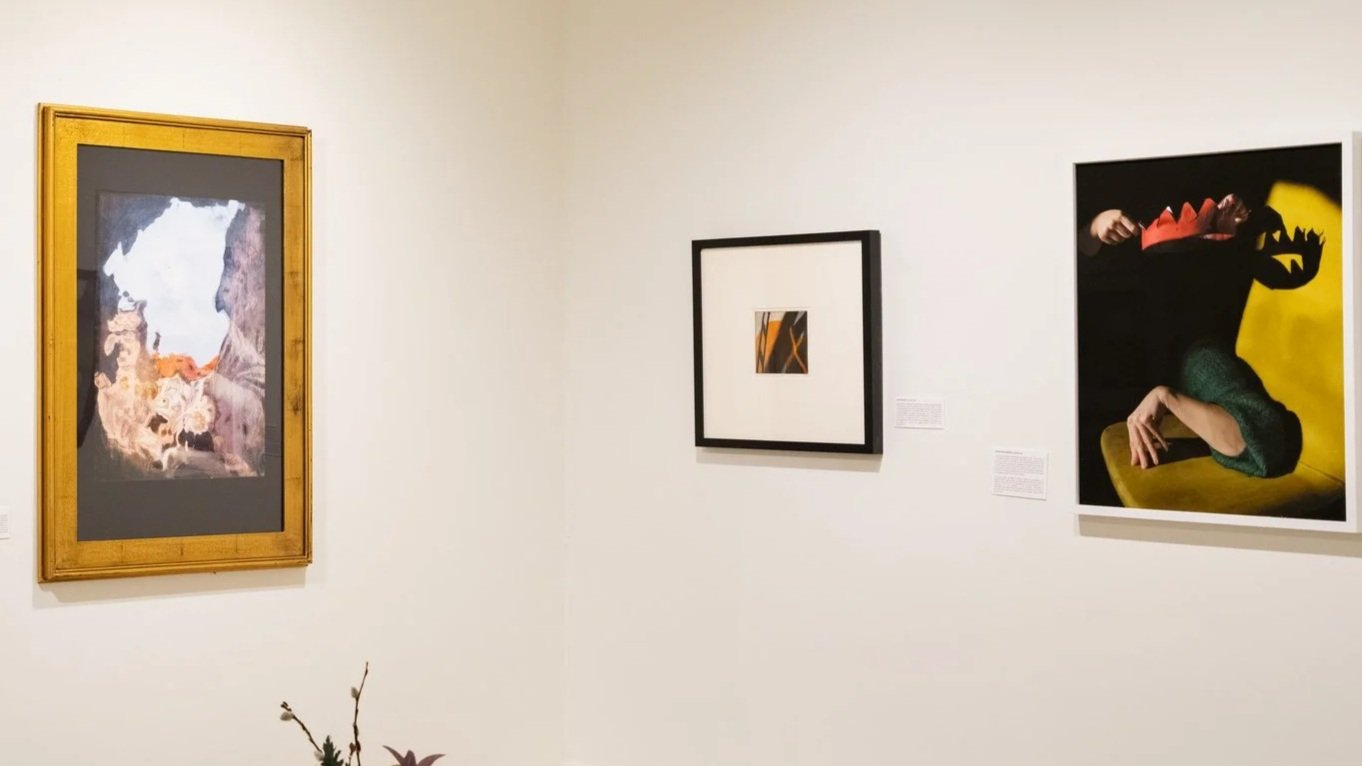
I become a mother and stop sleeping through the night. Years go by, my child sleeps soundly in his bed but I still wake at every noise. My father comes to live with us and suddenly, I am a mother to everyone. As I drift off to sleep I can no longer tell my dreams from reality. In one nightmare my father tells me he’s only got two weeks to live. In another, I am late to pick up my son from school and never see him again. I am afraid of monsters, but I move towards them: we circle each other until I realize they are just as afraid of me as I am of them.
My images follow the logic of dreams, where we are trapped in a strange colorful world, playing an endless game of hide-and-seek in a labyrinth of love and fear, knowing there is no way to escape but to wake up. This work meditates on the emotional landscape of motherhood and parent-child relationships, where tenderness, intimacy, and play entwine with guilt, frustration, and a constant sense of what could be lost.
Majesty, 2025. Archival pigment print, 24 x 18 inches, 25 x 19 framed. Edition #1 of 8 + 2 AP. $1,400
Anastasia Sierra is a photographer based in Cambridge, MA. Her work investigates the psychological complexities of motherhood, womanhood, and the domestic sphere, revealing profound vulnerability inherent in intergenerational bonds.
Sierra’s photographs have been exhibited in solo and group exhibitions at the Griffin Museum of Photography, Danforth Art Museum, Emerson Contemporary Gallery, Panopticon Gallery, Duncan Miller Gallery and Soho Photo Gallery. She is the recipient of a 2026 LensCulture Art Photography Award, was named a 2025 Photolucida Critical Mass Top 50 finalist, and is included in the 2025 Lenscratch Student Prize: Top 25 to Watch.
Her work is featured in the anthology Eye Mama: Poetic Truths of Home and Motherhood (teNeues Verlag, 2023) and has appeared in DEAR DAVE, Lenscratch, and Musée Magazine. Sierra holds a BA in Linguistics and is an MFA candidate at the Massachusetts College of Art and Design (2026).
ALEYANA MITCHELL | BROOKLYN, NY
From a Distance, 2025. Archival pigment print, 20 x 16 inches. Open edition. $600
If These Women Were Ever a Garden is a photographic series that prioritizes an eco-aesthetic imagination of the Black women in my family existing in nature, uninterrupted by societal expectations. By photographing these women, I create and preserve spaces where nothing prevents the reflection of familial relationships and their connection to the land that holds our memories.
These images were taken in my hometown of Baltimore, where, over time, property and land ownership are increasingly erased due to ongoing gentrification. Memories and photographs ultimately sustain the legacy of those who have fought to exist freely in this environment. There is a constant relationship between my family and the land where we gather, shaped by the labor and care invested to create a stable life in a world that limits our possibilities.
Through the shared kinship between my family and me, I invite the camera to participate in the dynamic between the Black body and the land to which we feel deeply tethered. Using large format black and white portraits. My images feature these women holding the shutter cable themselves, emphasizing the camera’s direct role in granting my sitters agency over their own representation. This series envisions an eco-aesthetic world that embraces the endless potential of Black womanhood.
Aleyana Mitchell is an artist based in New York. Born in Baltimore, Maryland, she creates image-based work that explores connectivity and belonging within the community she calls home. Mitchell holds a BFA in Photography from Parsons School of Design. Using portraiture to delineate the familiarity within Black spaces, she introduces narratives of comfort, kinship, and safety through her collaborative approach to image-making.
Mitchell has exhibited at Baxter Street Camera Club, International Center of Photography, Anna-Maria and Stephen Kellen Gallery, among others. Her work has been published by Dashwood Books. Mitchell holds a BFA in Photography from Parsons School of Design.
PHILIP SAGER | SAN FRANCISCO, CA
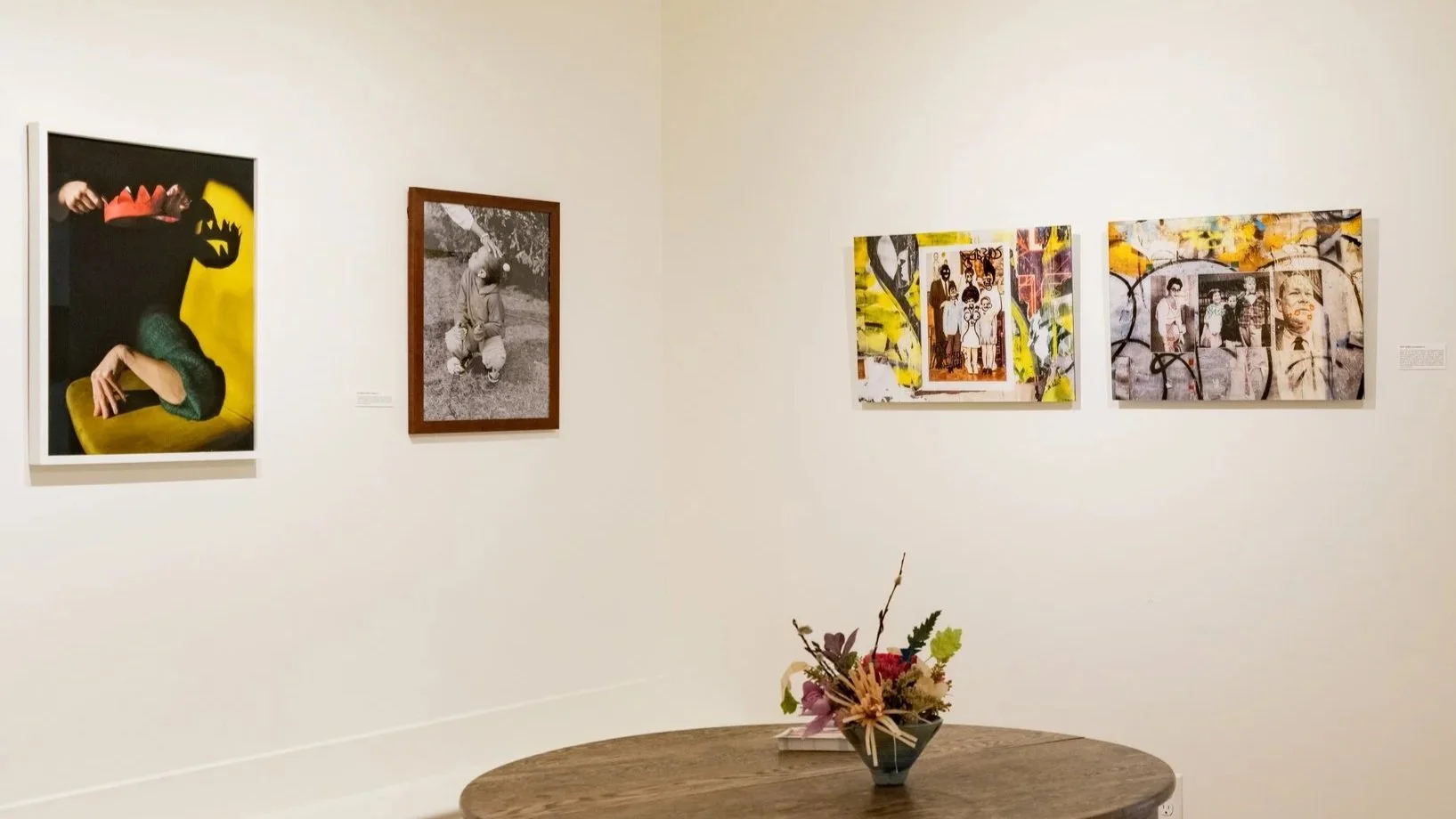
Kisses, February 10, 2025. Acrylic prints fine art archival pigment prints, 16 x 24 inches. Edition #1 of 8 + 2AP. $875
Wealth, March 20, 2024. Acrylic prints fine art archival pigment prints, 16 x 24 inches. Edition #1 of 8 + 2AP. $875
Family Frames is a personal exploration of loss, fragmentation, and the passage of time. The project examines how identity is projected, revised, and experienced in public space.
I enlarge my own childhood family photographs to roughly two feet in the longest dimension and wheat-paste them onto flat surfaces throughout public spaces in San Francisco, returning repeatedly to document their transformation as weather, grime, tags, tears, and public interventions alter the images. As the portraits fade and fracture without my adding content, they echo the dysfunction and disintegration that shaped my own family experience. At the same time, these private archives enter civic discourse.
The original photographs were discovered in cardboard boxes after my mother’s death. I selected representative images, scanned them, and printed them on thin architectural paper chosen to accelerate weathering. Over a period of about two years, as I install and revisit the works, returning almost daily to photograph their metamorphosis, passersby often stop to share their own family stories, drawn into an evolving exchange between memory, place, and public life.
Community interventions function as co-authorship and editorship. Collective memory layers itself onto personal history until the images no longer belong solely to my family but become shared. Blending constructed and documentary strategies, the work invites dialogue about visibility, consent, the passage of time, and the erosion of connection. These are not restorations but records of change, asking what survives and who ultimately authors the image- a personal elegy and a social document made with community collaboration.
Philip Sager is a San Francisco–based visual artist whose work uses photography and public engagement to explore emotional fragility, loss, and the layered nature of perception. He investigates how the brain constructs meaning from visual experience-filtering, simplifying, and at times distorting what we see, so that perception becomes both recognition and self-editing. Informed by subconscious memory and metaphor, his images reflect the fractured and often contradictory texture of emotional life.
Trained as a cardiologist, Sager brings a clinical sensitivity to his visual practice. Years of interpreting X-rays and fluoroscopy- reading two-dimensional shadows to understand three-dimensional anatomy- sharpened his awareness of ambiguity, partial information, and the subtle traces that suggest what lies beneath the surface.
Sager studied photography at the Massachusetts Institute of Technology, Yale University, and the Apeiron Workshops. He presented Fragmented Memories and related work in a solo exhibition at the Griffin Museum of Photography, and his recently completed project Family Frames was a 2025 Critical Mass Top 200 finalist.
