
UNBOUND15!
July 1 – August 8, 2026
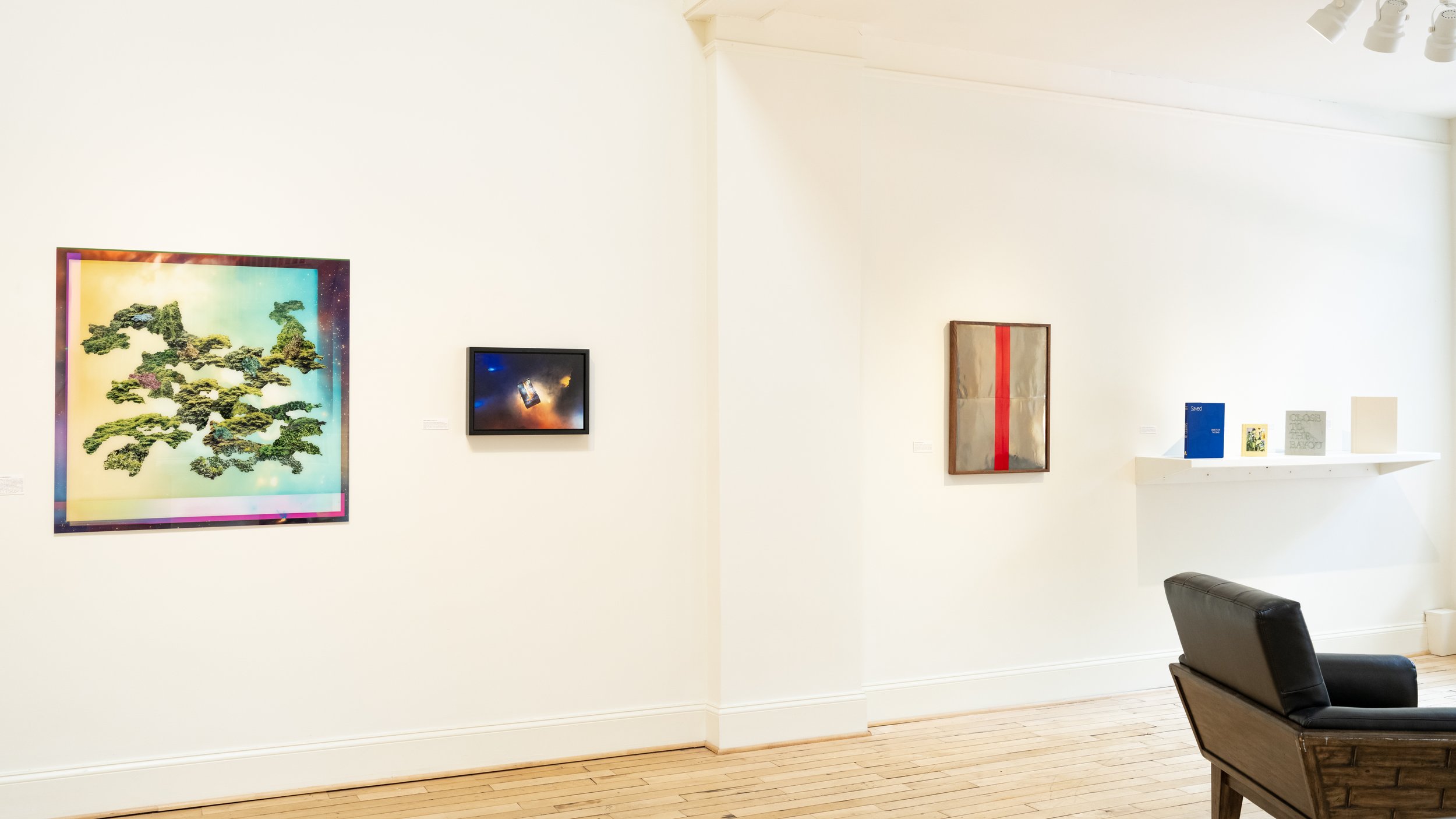
JEREMY STARN • HENRY CRAWLEY • NATHAN WILKINSON • JODY SERVON & LORENE DELANY-ULLMAN • SARA J. WINSTON & ILEANA RAMIREZ • DIMITRI STASZEWSKI • KATE THOMPSON
JEREMY STARN | HARRISONBURG, VA
I’m interested in the ever-evolving role of the photographic medium in reshaping human interaction with the natural world. Too easily the photograph's unique likeness to reality easily tricks us into believing the image is the world. By subsuming the world through endless representations, this proliferation of photographs builds a new, disparate reality. However, as the world is flattened, so too is the photo-grapher. When our experience with the natural world begins in two dimensions, the ground beneath becomes irrelevant and lifeless. What kind of knowledge of the world is maintained when 'knowing' is obtained solely from flattened representations? What kind of weight is felt when living through images?
While living in Panama, I took endless photographs of the jungle. And yet, I don’t understand it any better. This series playfully uses those photographs to create fantastical landscapes of digital jungles. Using AI to make my pixel selections, I cut, paste, transform, duplicate, and distort what was once a representation of “the wild” into something easier to consume. This series consists of archival pigment prints mounted on aluminum composite substrate and sealed with polished epoxy resin. The epoxy resin grants visual depth, conceptually encases the jungle in plastic, and offers a subtle uniqueness to the final artwork, while protecting the print.
I make these photographs to show what I find and how it is found: discarded objects, jumbled and incongruous. These relics have outlived their original use. Together, their chance associations form a grotesque Exquisite Corpse—a reflection on the waste we leave behind and its persistent presence in the environment.
Pink #7, 2026. Archival pigment print, 44 x 44 inches, mounted. Edition #1 of 3. $1,500
Jeremy Starn was born in Louisville Kentucky in 1991. He earned his BFA in Photography from the Art Institute of Boston at Lesley University in 2014. He has worked as a photojournalist in Southeast Asia, Europe, and Central America before moving to Virginia in 2023. His work has been exhibited at the Smithsonian Museum in Washington DC, New Britain Museum of American Art in Connecticut, Google Inc. in Cambridge, MA, and the Staunton Augusta Art Center in Virginia. He is currently an MFA candidate at James Madison University in Harrisonburg, Virginia.
HENRY CRAWLEY | BROOKLYN, NY
Sleep Well Best, 2024. Dye sublimation print on aluminum, 12 x 18 inches. Edition #1 of 3. $1,280
This series of photographs, titled Year of the Knife, largely narrates a personal fear of death, and the vast, fantastical unknown that follows. Through the construction of practical miniatures and stage-like spaces, I've created glimpses into spaces of annihilation. Drawing from my admiration of obscure B Horror and fascination in abandoned structures across the United States, my work investigates the second life a space takes on when humans eventually leave it for another.
Made in my small home studio in Brooklyn, each photograph is meticulously planned. Starting with moodboarding, then sketching, fabrication of set pieces, staging/lighting, and climaxing with the click of the shutter. The work for me has become an exercise of control, being able to artificially create destruction of great proportion on my own terms.
After all, you can't be scared of what's already there.
Henry Crawley is a photographer living and working in Brooklyn, NY. Combining miniatures and practical effects, his photographs are fantastical tableaus of disarray, examining artifice and the decay of everything we consume. Crawley graduated with a BFA in photography from Pratt Institute in May of 2023.
NATHAN WILKINSON | INDIANA
Photographic light-sensitive material has a silver body and psyche; images emerge from a blank surface through chemical reactions, as if they were thoughts bubbling up from the unconscious. Experimental and historical photographic processes form the foundation of my practice, through which I create artifacts of fabricated memories, visitations, and chemical traces. Using an auto-ethnographic approach, this work pulls from my experiences with pharmaceutical-induced psychosis to reconsider our relationship to photography as artifact, as a product of intuition, and as a site where memory is constructed.
My process walks the line between mad scientist, random chance, and gut intuition. I combine photograms with darkroom chemical manipulation to transform black-and-white silver gelatin prints into metallic surfaces. Through varying orders of operations, I apply mixtures of sodium hydroxide, ammonia, bleaching agents, and color-coupling dyes to reveal the paper’s silver materiality. It is a process of controlled chaos: each print is unreproducible, yielding unique silver markings and tones left to total chance. The color red references the language of the darkroom and its red-lit conditions while also suggesting an internal, bodily space. Through these manipulations, the photograph becomes an imperfect, self-reflexive material that reflects light, space, and time.
The absence of representational imagery draws attention to the surface of the paper, making materiality itself the image. These mirror-like prints encourage a phenomenological experience, focusing on perception, the act of looking, and the viewer’s embodied presence. The viewer and the surrounding space merge with the photograph’s content, sharing equal importance. The silver surface becomes the space we inhabit, while the minimalist forms emerge like apparitions.
Threshold, a Space in Between, 2026. Silver toned and color-coupled gelatin silver prints, artist frame, 28.75 x 22.75 inches. Unique. $3,200
Nathan Allen Wilkinson was born in Peoria, AZ in 1999. He is currently a third year MFA Studio Art Graduate candidate and Instructor of Record at Purdue University, and received his BFA from Western Washington University in 2022. Wilkinson is an interdisciplinary artist working with experimental and historical photographic processes, sculpture, woodworking, sound, and installation. He is recognized for his chemical manipulation of silver gelatin prints, wet plate collodion photographs, and uncanny imagery. His artwork has been exhibited nationally and internationally since 2016, notably at Ohio University’s “Alternative 2025,” the Photographer’s Eye, A Smith Gallery, SE Center for Photography, Millepiani Coworking (Rome, Italy), Indianapolis Art Center, and the Western Gallery. His work has been acknowledged through awards, scholarships, publications, and competitive juror positions.
JODY SERVON & LORENE DELANY-ULLMAN | NC / CA
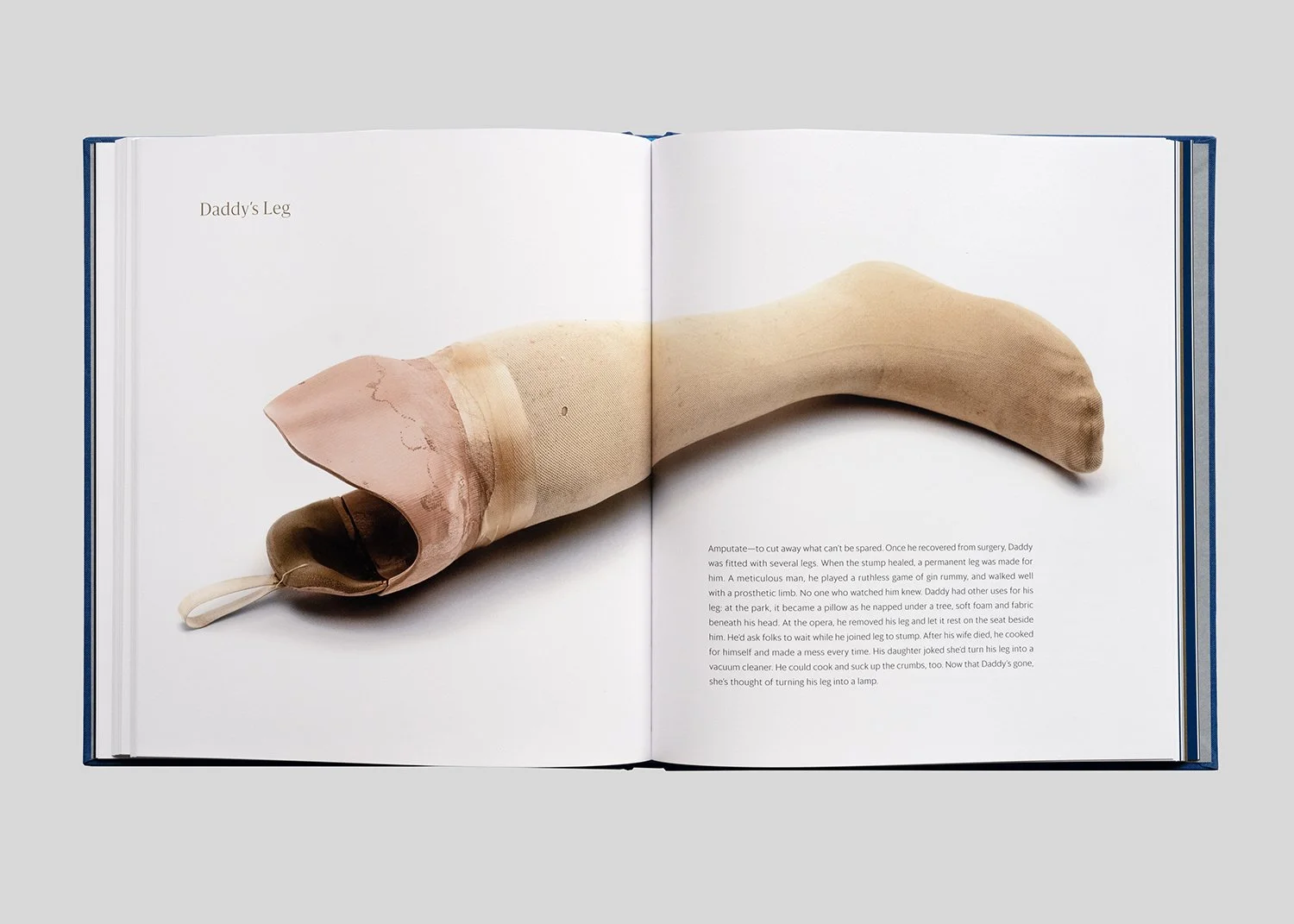
Saved: Objects of the Dead, 2023
Photo book, 11 x 9 3/4 inches, 136 pages.
First Edition of 750 books.
$45
Saved: Objects of the Dead, 2023. Photo book, 11 x 9 3/4 inches, 136 pages. First Edition of 750 books. $45
Saved: Objects of the Dead is a long-term collaboration between artist Jody Servon and poet Lorene Delany-Ullman. Color photographs of belongings kept after a loved one’s death are paired with prose poems distilled from interviews, honoring the emotional afterlife of ordinary things. Each participant lends an object and shares its story, expanding authorship beyond artist and poet to the community itself. Word and image together form a lyrical archive of grief, memory, and enduring love.
The photographs are made with close attention to each object’s materiality: surface, scale, and evidence of use. Frayed fabric, a worn watch face, and residue embedded in everyday tools become visual proof of intimacy and the passage of time. The poems are shaped by remembered lives and the ongoing presence of loss.
The book is the culmination of this project: a limited-edition volume that blends object study, interview-based ethnography, and lyric language, inviting readers into a quietly powerful conversation about mortality, attachment, and what persists after death. It includes “Mattering,” an essay by Cora Fisher, Curator of Visual Art Programming, Brooklyn Public Library, along with micro-essays and photographs by Sonya Clark, Alex Espinoza, Erika Hayasaki, Swati Khurana, and Leslie Gray Streeter.
Artist Jody Servon and poet Lorene Delany-Ullman met at the Vermont Studio Center in 2009 and have collaborated ever since. They have achieved widespread recognition with their collaborative work, ""Saved: Objects of the Dead."" This unique blend of photography and poetry offers a profound exploration of the human experience of life, death, and memory, and invites others to join in this exploration. The work has been featured in over thirty exhibitions across the US, published in five literary journals, and published in CNN Style, Los Angeles Review of Books, The Daily Mail, and the New York Times.
Jody Servon is currently a professor and coordinator of the art management program at Appalachian State University in Boone, NC, where she lives with her family and terrier mutt.
Lorene Delany-Ullman holds an MFA in English (Poetry) from the University of California, Irvine, and has taught writing at UC Irvine for the past twenty-four years. She resides in Newport Beach, California, with her husband, Richard.
SARA J. WINSTON & ILEANA RAMIREZ | RED HOOK, NY
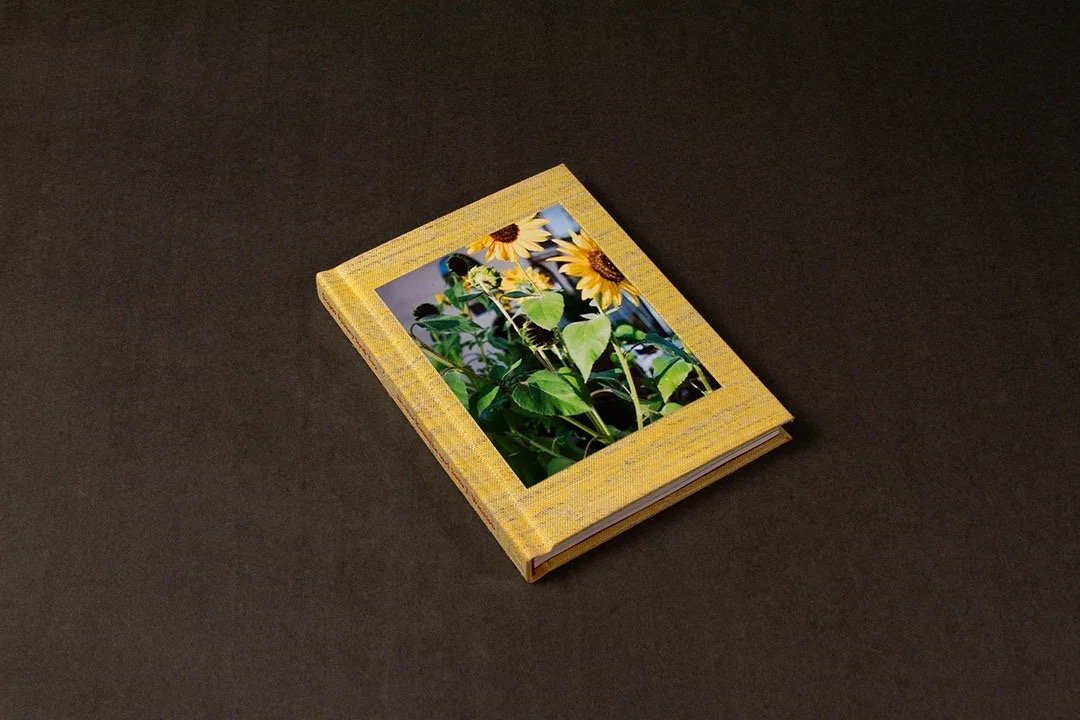
Photo book, 6 x 4.25 inches, 100 pages.
Hardcover edition of 50.
$75
Sugar Honey Iced Tea, 2025. Photo book, 6 x 4.25 inches,
100 pages. Hardcover edition of 50. $75
"We dance around the kitchen when we should be washing dishes
Fluttering curls frame long lashes wide with glee
Delirious with a stolen second that’s endless in your eyes
What are we to each other
That this, our best offering, is the one so often scarce?
I don’t dare catch the thought or breath for fear of losing it
You splay your arms and spin, soft tongue emerging as you concentrate Even for you, joy demands a sacrifice
I can’t look in case you fall, in case you fly
After, we hold each other close and remember that it happened
My solace later when, lying awake, I number all my faults
I am not worthy of your easy laugh but you give it anyway
Your hope like feathers in my palms
One breath and they scatter on the air
-Ileana Ramirez
Sara J. Winston learned the phrase ""sugar honey iced tea"" in the fourth grade from a substitute teacher in her New York State public school. The phrase is a euphemism and acronym for the word shit. She began using the term regularly sometime in 2019 after her daughter was born. Now, at the age of five, her daughter has three toy cats and their names are Sugar, Honey, and Iced Tea.
Sara is a chronically ill parent of a young child and, until recently, the daughter of a chronically ill father. Sugar Honey Iced Tea is a description and response to the pace of some of life’s challenges: months spent nursing an infant, years spent caring for a sick body, hoping for and imagining a more equitable future, waiting for a child to fall asleep, wishing for the sun to rise, and trying to visualize the idea that, like her dad often said, we are too visceral to be intelligent. "
Sara J. Winston is a photographer and writer based in New York. She produces photographs for books and exhibitions, she writes episodic creative-nonfiction, and makes hybrid image-text books. She is the author of several books, among them: Too Visceral to be Intelligent (1080 Press, 2026), Sugar Honey Iced Tea (For the Birds Trapped in Airports, 2025), Foibles & Avoidance (National Monument Press, 2024), A Lick and a Promise (Candor Arts, 2017), and Homesick (Zatara Press, 2015).
DIMITRI STASZEWSKI | AUSTIN, TX
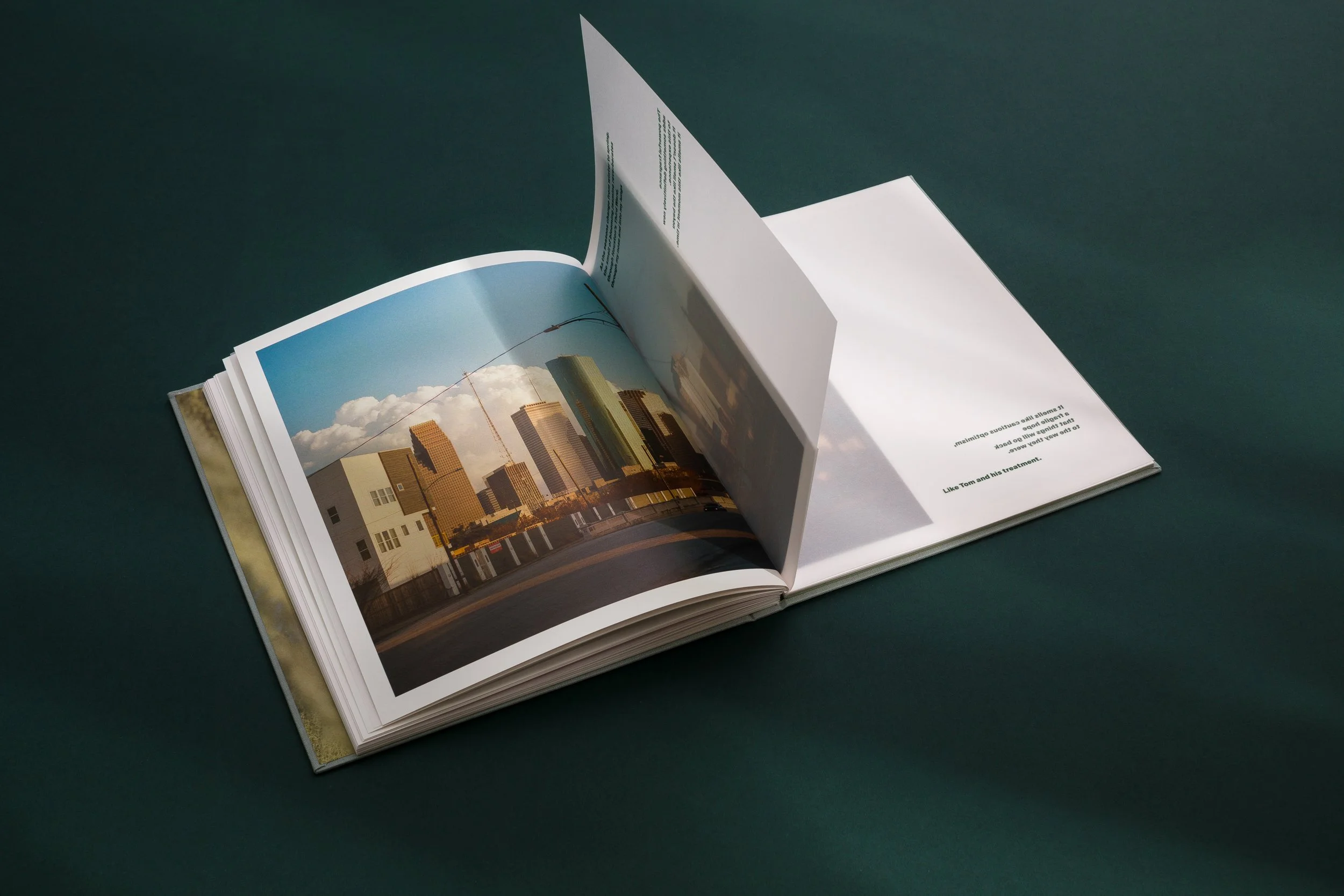
Photo book, 7.56 x 9.12 inches, 120 pages.
Edition of 500.
$65
Close to the Bayou, 2024. Photo book, 7.56 x 9.12 inches, 120 pages. Edition of 500. $65
Close to the Bayou is a journey of artmaking in the face of death and explores what is passed on through that process. The work touches on themes related to male intimacy, sickness in isolation, mentorship, and cancer.
The work uses lyrical approach to photography and writing to create a documentation of the emotional space the artist, Dimitri Staszewski, and Thomas Mann, an uncle figure and artistic mentor share as Mann goes through treatment for prostate cancer during the height of the COVID-19 pandemic. During that unprecedented period of isolation, Mann, a renowned jewelry and sculpture artist, continued producing work at a frenetic pace.
The work encourages audiences to question what it means to be close to the bayou. While that metaphorical space is open to interpretation, Close to the Bayou aims to guide viewers toward examining their own closeness with life and death, love, light, and the process of creating regardless of how much time we have left.
As Staszewski came close to finishing this project, he was diagnosed with cancer himself, which required surgery and chemotherapy to treat. He had to reconsider if the project was finished and eventually decided to rework the book as he was forced to apply the metaphor he had been building to his own experience. The bizarre timing and Staszewski's personal experience with chemotherapy and cancer eventually became a part of his artistic practice.
KATE THOMPSON | RICHMOND, VA
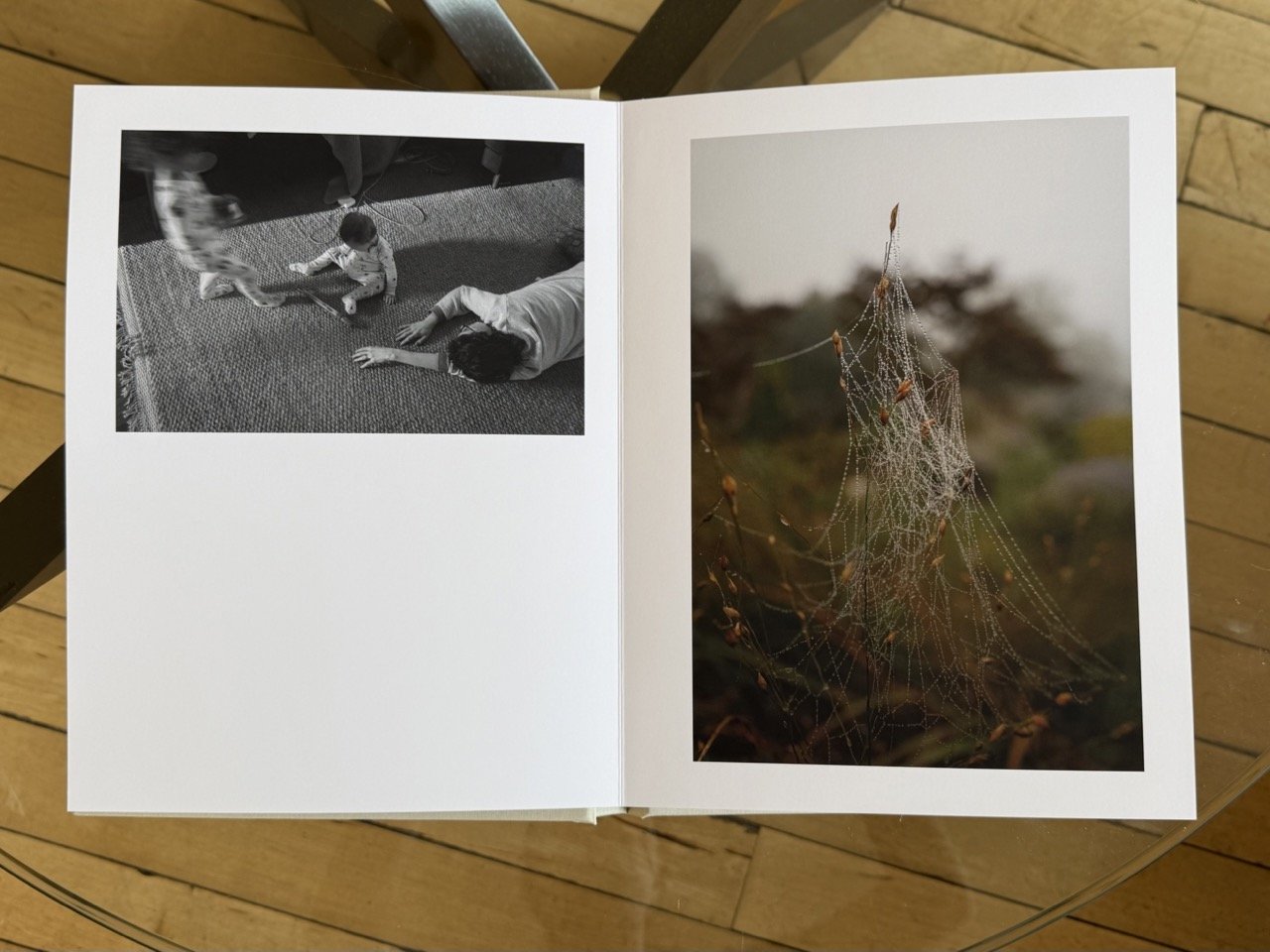
Photo book,
9 x 12 inches, 66 pages.
Edition of 3.
$150
She Did What She Could, 2025. Photo book, 9 x 12 inches,
66 pages. Edition of 3. $150
She Did What She Could is a photo book that explores the inextricable link between the my experience with postpartum depression and the isolation of the 2020 pandemic. Having used my camera as a protective barrier during a period of intense grief and identity loss, I was somehow able to alchemize the painful reality of that year’s emotional landscape work into a book that deepened my own understanding of the experience. The work reflects the "productive tension" of motherhood, having been created entirely in small, interrupted bursts that mirror the chaotic nature of the role of an artist mother. Ultimately, the project serves as both an act of defiance and a journey toward self-forgiveness, where the process of creation was as significant if not more than the subject matter itself.
As an artist and mother, Kate Thompson’s work explores the complex intersections of identity, mental health, and the domestic sphere. Her current body of work is emerging from the liminal time and space of 2020, where the simultaneous onset of the COVID-19 pandemic and postpartum depression reshaped her relationship with both her art and her family. By using the camera as a necessary barrier and a tool for survival, she documents the isolation and loss of agency inherent in early motherhood, transforming internal rage into a visual language of persistence.
Her process is defined by productive tension, often creating work in brief, interrupted bursts that mirror the realities of a life punctuated by caregiving. Moving away from the traditional flow state, she embraces disruption as an integral component of her creative output. Her current projects revisit past trauma to find a path toward self-forgiveness, positioning her work as both an act of defiance against and a profound acceptance of the maternal experience.
